
Księgarnia Uniwersytecka
Uniwersytet Przyrodniczy w Poznaniu
Show menu
978-83-7160-696-0
Indeks: 978-83-7160-696-0
Rok wydania: 2012
Wyd. I
Strony: 105
Wersja papierowa: oprawa miękka
Licencja: komercyjna

Dostępność: w magazynie
Cena: 18,00 zł
Dodaj do koszyka
leśnictwo i technologia drewna,
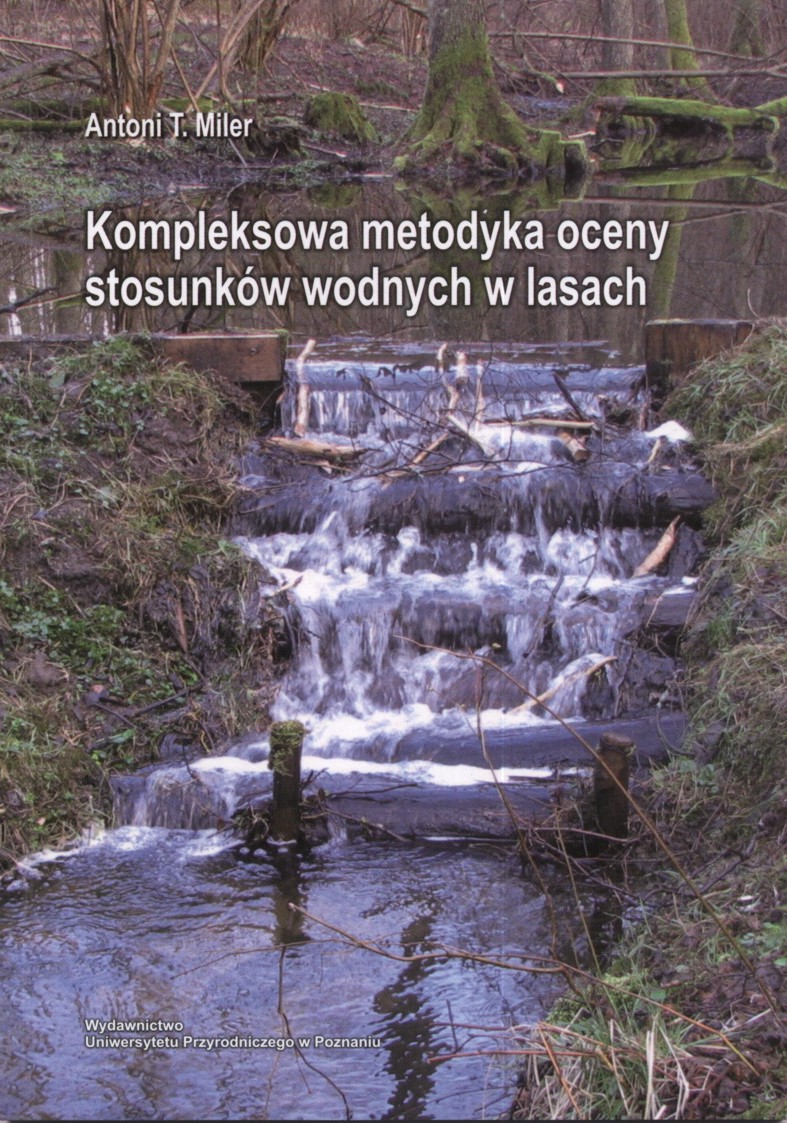
Kompleksowa metodyka oceny stosunków wodnych w lasach
English title A comprehensive method to assess water conditions in forests

W monografii przedstawiono najważniejsze relacje, po części synergiczne, pomiędzy lasem (ekosystemami leśnymi) a wodą (stosunkami wodnymi w tychże ekosystemach). Wyeksponowano aspekty metodyczne oraz stosowne obliczenia dla oceny możliwości realizacji małej retencji wodnej na przykładzie małej zlewni leśnej Pojezierza Krajeńskiego. Prezentacja zagadnień z hydrologii leśnej wydaje się zasadna, ponieważ w Polsce nie opracowano dotąd podręcznika z tego zakresu, a na świecie są jedynie dwa mające w tytule „hydrologia leśna” (forest hydrology). Wybór zagadnień z hydrologii leśnej oraz odniesienia do wyników badań i opinii innych autorów, zwłaszcza syntetyczne, krytyczne odniesienie się do tez zawartych w raportach Intergovernmental Panel on Climate Change (IPCC), zmuszają do refleksji. W monografii są omawiane m.in. obiekty małej retencji wodnej w lasach: rodzaje budowli, określenia, przykłady rozwiązań, a także przebieg realizacji inwestycji (budowy urządzeń i obiektów małej retencji wodnej). Wydaje się, że szczególnie cenne dla inwestorów (np. nadleśnictw) może być przedstawienie „harmonogramu” postępowania podczas realizacji budowy obiektów i urządzeń małej retencji. W prezentowanych treściach zwrócono uwagę na podstawy teoretyczne. Jest to niezwykle ważne w czasach, gdy autorzy projektów korzystają z gotowych programów komputerowych, nie zawsze wnikając w teoretyczne podstawy metod obliczeń. Praca, ze względu na tematykę i sposób jej prezentacji, może być cennym źródłem wiedzy przede wszystkim dla studentów i absolwentów leśnictwa oraz pracowników zatrudnionych w różnych instytucjach zajmujących się ochroną środowiska na terenach leśnych, a także dla pracowników naukowych i praktyków z innych pokrewnych dziedzin.

1. Wstęp

2. Wybrane zagadnienia z hydrologii leśnej 
2.1. Las a woda 
2.2. Mała retencja wodna 
2.3. Zmiany klimatyczne 
2.4. Metody badań w hydrologii leśnej 
2.5. Modele hydrologiczne 

3. Obiekty małej retencji wodnej w lasach 
3.1. Wprowadzenie
3.2. Rodzaje budowli – określenia, przykłady rozwiązań 
3.3. Przebieg realizacji inwestycji – budowy urządzeń i obiektów małej retencji wodnej w lasach 

4. Zastosowane metody badań 
4.1. Wyznaczenie powierzchni (zlewni) badawczej 
4.2. Lokalizacja aparatury i sprzętu pomiarowego 
4.3. Obliczanie bilansu wodnego zrównoważonego 
4.4. Model Nasha 
4.5. Adaptacja metody SCS-CN do obliczania opadu efektywnego 
4.6. Algorytm obliczeń symulacyjnych odpływów ze zlewni 
4.7. Metody obliczania trendów i okresowości zmian klimatycznych 

5. Teren badawczy 
5.1. Charakterystyka Nadleśnictwa Lipka 
5.2. Opis terenu małej zlewni leśnej 
5.3. Opis zabudowy badanego cieku 

6. Wyniki badań 
6.1. Warunki meteorologiczne w okresie prowadzonych badań 
6.2. Stosunki wodne w badanej zlewni 
6.3. Obliczanie opadu efektywnego w badanej zlewni zmodyfikowaną metodą SCS-CN 
6.4. Zmiana charakteru odpływu wezbraniowego w badanej zlewni po zabudowie cieku 
6.5. Długookresowe zmiany klimatyczne 

7. Ocena uzyskanych rezultatów 

8. Wnioski 

Aneks 

Literatura 

Summary

The monograph constitutes an extensive study, in the opinion of its author presenting the most important relationships, partly synergistic, between the forest (forest ecosystems) and water (water conditions in forest ecosystems).
The main motif in this study is directly supplied by the title itself: „A comprehensive method to assess water conditions in forests”. Thus the monograph is a study focusing on methodological aspects and respective calculations for the assessment of small water retention potential based on a small forest catchment in the Krajeńskie Lake District, Poland.
The multifaceted character of this book is first of all its advantage, but might also be seen as a drawback. One of the primary advantages of this study is the collection – within Chapter 2 “Selected problems in forest hydrology” – of research results and opinions of different authors, concerning modification of components of the water balance in forest areas. The abundance of information not only facilitates further analysis of this study, but also supplements our knowledge with data, which collection would require a considerable amount of time and effort. Enriching the presented wealth of information with opinions of other researchers provides an incentive to reflect on the subject. Definitely it is an advantage to present this attempt at a comprehensive approach to different aspects (problems) implied e.g. by the adverse climate change, synthetically presented in the IPCC 2007 Report (by the Intergovernmental Panel on Climate Change).
The Introduction (Chapter 1) presents a justification for the decision to investigate the subject, the aim of the study and a working hypothesis: “relatively simple drainage structures (weirs) highly significantly increase water retention resources in catchments, particularly forest catchments located in lowland areas (lake districts)”. We need to stress the fact that such structures are constructed mainly by non-governmental organizations, which do not precede such works with the performance of studies considering water cycle in the whole system (catchment). This chapter also presents a general description of source materials, on which this monograph is based.
Chapter 2 describes selected problems in forest hydrology, i.e. forest-water relationships, the concept and importance of small retention particularly in forests, the adverse climate change mentioned above, methodology of studies in forest hydrology as well as a synthetic presentation of the foundations of hydrological models. It is justified to present issues in forest hydrology, as in Poland no textbook has yet been written on forest hydrology, while only two textbooks worldwide are entitled Forest Hydrology, i.e. 1) Lee R., Forest Hydrology, Columbia University Press, New York, 1980 & 2005, and 2) Chang M., Forest Hydrology. An introduction to water and forests, CRC Press, Boca Raton, London, New York, Washington D.C., 2003 & 2006. This chapter contains particularly important data and opinions.
Chapter 3 presents small retention structures in forests: types of structures, terms, examples of solutions, etc., the course of realisation of these investment projects (construction of small retention structures and facilities in forests). Particularly the presentation of a schedule for the procedure in the realisation of these facilities and small retention structures may prove valuable for investors (e.g. forest districts). The complicated procedures connected in Poland with the realisation of investments, particularly water structures, are presented in a simple, clear manner.
Chapter 4 is devoted to a description of applied research results. In the first two subchapters a small experimental forest catchment is presented together with the gauging devices installed in its area. The further subchapters describe a method to calculate an equilibrium water balance, theoretical foundations for the Nash model, the essence of adaptation of the SCS-CN method (Soil Conservation Service – Curve Number) for the calculation of effective precipitation in forest catchments, an algorithm for simulation calculations of catchment runoff according to the above mentioned model as well as selected methods for the calculation of trends and periodicity of climate change. When discussing the adaptation of the SCS-CN method the applicability of other methods having similar assumptions is also indicated.
Presented methodological foundations for the analyses discussed in this chapter are coherent. A detailed approach to formal (mathematical) dependencies facilitates a comparison of theoretical foundations for each of the presented methods. It is of particular importance in the era when designers use commercially available computer programmes, not always analysing the theoretical background for the computational method.
Chapter 5 contains specific data concerning a small experimental forest catchment located in the Lipka Forest District, situated in the Krajeńskie Lake District. This chapter also describes the installation of 6 small wooden weirs in the catchment, which primary objective is to significantly increase water retention. It was stressed that this small catchment is quasi-representative for the Krajeńskie Lake District, thus facilitating a certain generalisation of the collected results of tests and analyses.
The sixth major chapter discusses results of analyses. Successive subchapters present: meteorological conditions in the period of the study, water conditions in the investigated catchment, calculation of effective precipitation using the modified SCS-CN method for the analysed catchment, changes in the character of bankful discharge in the investigated catchment after it was developed with the constructed weirs as well as longterm climate change. An important aspect is connected with an indicated potential for quantitative (!) assessment of an increase in retention capacity after the construction of e.g. weirs (or other hydrological improvement facilities/structures) in the catchment. In Poland, except for scarce cases, the utilisation of watercourse bed retention is still neglected. The manner in which meteorological data are presented in graphs is highly illustrative.
Chapter 7 is a continuation of the previous chapter, presenting an assessment of the described results mainly in view of the working hypothesis given in the Introduction.
The last Chapter 8 presents five conclusions, referring to the contents of the previous chapters.
This monograph, thanks to its subject matter and the manner of its presentation, may constitute a valuable source of knowledge particularly for forestry students and graduates, as well as employees working in different institutions focusing on environmental protection in forested areas, etc. A considerable part of this book contains descriptions, opinions and data, providing a valuable body of knowledge for students, research workers and practitioners in other related areas.